
 Anglais
 简体中文

 Chinois
 Anglais


Tongxiang Qianglong Machinery Co., Ltd. c'est de la haute technologie Fabricants de machines à tricoter plates informatisées en gros en Chine, spécialisée dans la conception, le développement et la fabrication de machines à tricoter.
Choosing among computerized flat knitting machine suppliers can feel like comparing catalogs that all use the same vocabulary. The machines look similar on paper, the specifications are dense, and every supplier says it offers reliable equipment and good service. The practical difference usually appears later: in how well the machine matches your actual products, how quickly your operators become confident, and how the supplier responds when a production question comes up at 10 p.m. before a shipment.
A useful way to evaluate computerized flat knitting machine suppliers is to look beyond the price list. Start with your product mix, then work through the machine system, the application details, and the support behind the sale. That order keeps the conversation grounded in production rather than brochure language.
What Good Computerized Flat Knitting Machine Suppliers Actually Do
From our experience in knitting machinery, a supplier’s real work begins before the order is signed. A good supplier should help you translate a product idea into a workable machine configuration, not simply quote the closest model in stock. That means asking about the yarns you use, the stitch structures you need, the widths you run, and how often your designs change.
- Ask enough questions to understand your production mix, not just your budget.
- Explain the difference between machine systems in plain language and connect them to your products.
- Discuss installation, operator training, spare parts, and routine maintenance before delivery.
- Be clear about what is standard, what is optional, and what your team will need to learn.
- Stay reachable after the sale, especially during the first weeks of production.
This is also where a manufacturer’s own history matters. A supplier that has spent decades around knitting floors tends to recognize the small details that cause downtime: a feeder adjustment, a yarn path issue, a pattern that behaves differently on a different gauge. Those details are rarely headline features, but they shape daily output.
Start with the Product, Then Match the Machine System
Computerized flat knitting machines are often grouped by the number of knitting systems. A single-system machine can be a sensible starting point for sampling, focused panel production, or products where one working system fits the job. A double-system machine gives more flexibility when your order book includes garment panels, trims, and changing designs. A three-system machine may suit production that benefits from additional knitting capacity, but it only makes sense when your yarns, structures, and operator skills are ready for it.
 Single System Computerized Flat Knitting Machine SeriesA practical starting point for sampling and focused panel production, with QL-152M offering multiple gauges, knitting widths, and pattern capabilities.View Product →
Our own range includes single-system, double-system, and three-system series, as well as combined single/double configurations. The right choice is not the model with the longest feature list. It is the model that fits the way your factory works today and can grow with the products you plan to make tomorrow. A supplier should be willing to say, “This configuration is enough for you,” when that is true.
A simple way to compare systems
| Machine system | Typical fit | What to discuss with the supplier |
|---|---|---|
| Single system | Sampling, focused panel production, and products that do not need multiple working systems. | Gauge, needle count, pattern changes, and expected output per shift. |
| Double system | Garment panels, trims, and mixed orders that benefit from more flexibility. | Carriage setup, feeder arrangement, software workflow, and operator training. |
| Three system | Selected apparel, shoe-upper, and technical knit applications with suitable yarns and structures. | Whether the extra system matches your stitch range, yarn behavior, and production targets. |
Use the table as a conversation starter, not a final answer. The same system label can behave differently depending on gauge, bed width, feeder configuration, and the software your team uses every day.
Applications Decide the Detail
Many buyers come to computerized flat knitting machine suppliers with one product in mind, then discover that a slightly different configuration would serve them better across the year. If you make whole garments, for example, the machine’s ability to handle shaped knitting and finishing details becomes central. If you produce shoe uppers, the conversation shifts toward structures, gauge, and the way the upper is integrated into the shoe-making process. Collar production has its own rhythm, often focused on repeatability and efficient output.
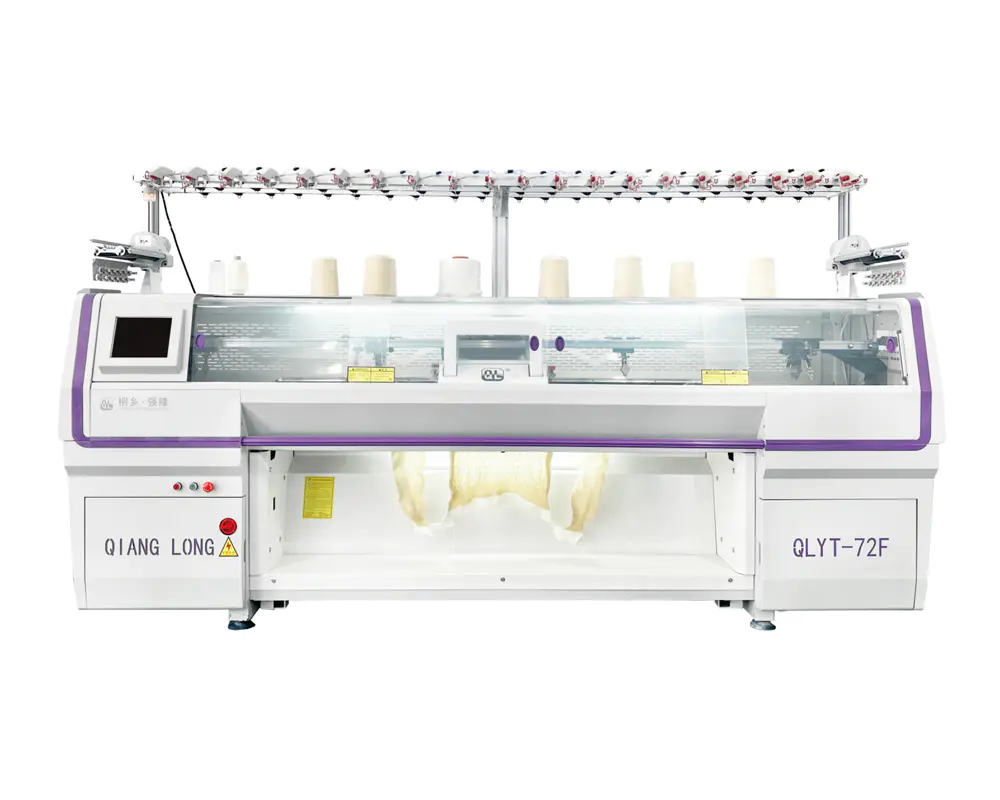 Whole Garment Computerized Flat Knitting Machine SeriesFor whole-garment production, this three-system series knits complete sweaters in one operation and supports shaping, intarsia, and multiple gauges.View Product →
Application-specific machines are not just labels. A whole-garment machine, a shoe-upper series, and a collar machine each ask different questions of the operator and the production plan. The supplier should be able to explain where one series ends and another begins, and when a more specialized model is worth the investment.
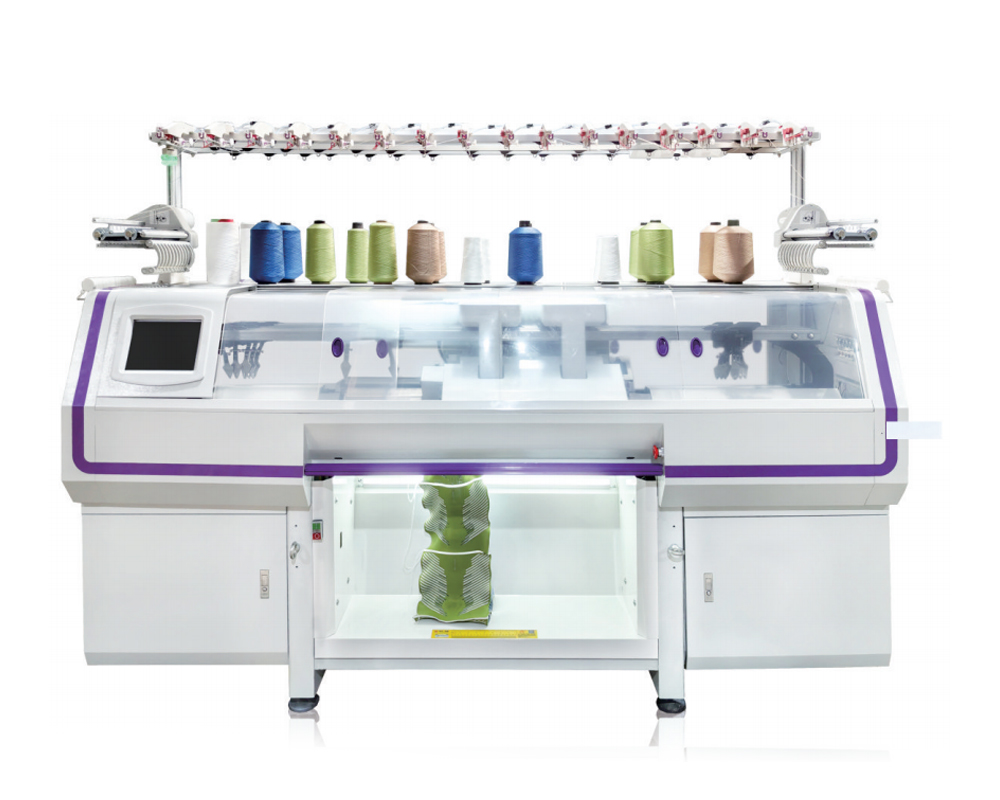 3D Shoe Upper Computerized Flat Knitting MachineA fully automatic series for 3D shoe uppers, with triple or quadruple systems, 14G/18G gauges, and pattern functions suited to upper production.View Product →
Supporting equipment deserves the same attention. Motorized feeders, zero-finishing yarn comb systems, and zero-elastic yarn comb options can influence yarn control, waste, and the consistency of the final fabric. These details are easy to overlook in a first quote, but they often decide whether a machine runs smoothly in real production. Ask how each accessory interacts with the main machine and what maintenance it requires.
Questions to Ask Before You Compare Quotes
Price matters, but it is only one line in the total cost of ownership. Before you compare offers from different computerized flat knitting machine suppliers, ask each one the same set of practical questions. The answers will tell you more than a list of model numbers.
- Can you recommend a configuration based on my actual products, yarns, and order sizes?
- What is included in installation, commissioning, and operator training?
- Which spare parts should I keep on hand, and how quickly can common parts be supplied?
- How does your team support troubleshooting after the machine is running?
- Can you explain the software workflow and how patterns are prepared and transferred?
- What maintenance tasks should my operators perform daily, weekly, and monthly?
- Are there optional feeders, yarn comb systems, or attachments that would genuinely improve my process?
A supplier who answers these questions clearly is usually easier to work with than one who only talks about price. If you are still shaping your shortlist, our contact page is a straightforward place to start a conversation about your product mix and production goals.
Where Supplier Experience Helps
QiangLong Machinery has grown from a mechanical manufacturing background that reaches back to 1986, when the story began with hand-operated knitting machines. Over the years, we have built a product range around computerized flat knitting machines, including single-system, double-system, three-system, whole-garment, shoe-upper, and collar solutions, along with feeders and yarn comb systems. Our company operates from Tongxiang, in a facility that covers more than 60,000 square meters of land with 80,000 square meters of building area, and we describe ourselves as a national high-tech enterprise with more than 35 patents and a service network that includes more than 100 after-sales staff and a 7×24 response commitment.
Those numbers are part of our story, but the more useful question is what they mean for your factory. They mean there is a team to discuss configuration before the order, a service structure after delivery, and a history of working with knitting production rather than only selling equipment. For a closer look at the selection process, our article on how to choose a computerized flat knitting machine walks through additional practical points.
A Practical Checklist for Your First Conversation
When you speak with potential suppliers, keep the conversation concrete. Bring a few product samples if you can, note the yarns and gauges involved, and describe your typical order size and changeover frequency. Ask how the proposed machine would handle your most demanding product, not only your easiest one. Then ask what happens in the first month after installation, when operators are still learning and production schedules are already running.
- Your main product types and the structures you knit most often.
- The yarns you use and any special handling requirements.
- Expected output, shift pattern, and changeover frequency.
- Available floor space, power supply, and operator experience.
- Training needs, spare-parts plan, and service response expectations.
The best computerized flat knitting machine suppliers are not necessarily the ones with the longest catalog. They are the ones who listen carefully, recommend a sensible configuration, and remain useful once the machine is part of your daily production. That combination is what turns a capital purchase into a working partnership.
